What does it take to create leaders?

Standard

Karachi

What does it take to create inventors, entrepreneurs and social scientists – in short critical thinkers and problem-solving individuals?

48


While literacy rates have gone up and enrollment at public and private sector universities have risen over the years, there remains a dearth of leaders and skilled workforce in every field.

The world is flat, or so Thomas Friedman the American journalist writes in his book. “Unfortunately the world has flattened out, those mass production jobs are increasingly being automated or outsourced. There are fewer and fewer decent jobs for those without a lot of knowledge… So a poorly funded and understaffed high school today is a pathway to a dead end.”

No longer is a student sitting in a classroom in Karachi a local citizen, he is now a part of the global world and will compete accordingly.

Tasneem Shabbir, the principal of Al-Murtaza School Network agrees. “Students today are no longer passive learners. They ask questions in the class because textbooks are not their only source [of information]. They go beyond that.”

The only time the country won a Nobel Prize was in 1979, when Dr Abdus Salam brought it home. Since then there have been no major scientific breakthroughs.

Sharmeen Obaid-Chinoy brought us an Oscar. And Abdus Sattar Edhi, who never went to school, has been awarded numerous peace prizes. But these achievements are rare. The youth needs more role models.

The country is plagued with escalating intolerance, overpopulation and poverty. What is needed to lead this youth bulge towards a prosperous future? Investment in education is the general consensus.

“Our country is facing with various problems in development and many of these problems will be tackled if we invest in education. Because when people are educated they will find out solutions,” said Nargis Alvi, who heads the Habib Public School.

Pakistan happens to be among the lowest spenders on education. Studies show education quality is directly proportional to economic growth. More than 40 percent of Pakistanis live below the poverty line, states a survey by the Benazir Income Support Programme.

The local education system is not doing any favours. It is creating a lot, where students are graded on the number of pages they produce rather than what they have to say. “Whatever was taught in the eighth grade would go flying out of the window when a student entered the next grade. That was because the rote-learning method was put to test. If, for example, a question was asked to write about the trees of Sindh, a child would write the whole chapter,” said Kirmeen Parekh, the headmistress of the BVS Parsi High School, which has done away with the local education board after viewing its disastrous results in its students.

Betram Dsouza, the principal of St Bonaventure’s High School of Hyderabad, chipped in: “There will be no development in education if public exams are not going to be fair. As I see, and as I have experienced, the exams in the matriculation system are not fair at all.”

For Shahina Ali Raza, the principal of Shahwilayat Public School, the answer to top quality education lies within quality teachers. “To develop quality education we need quality teachers. And for that the teachers’ professional development is very important.”

— The report includes input from an AKU-EB documentary

originally published here http://www.thenews.com.pk/Todays-News-4-217118-Quality-education-the-only-way-to-progress

At the shrine of the man-loving crocodiles

Standard

Karachi

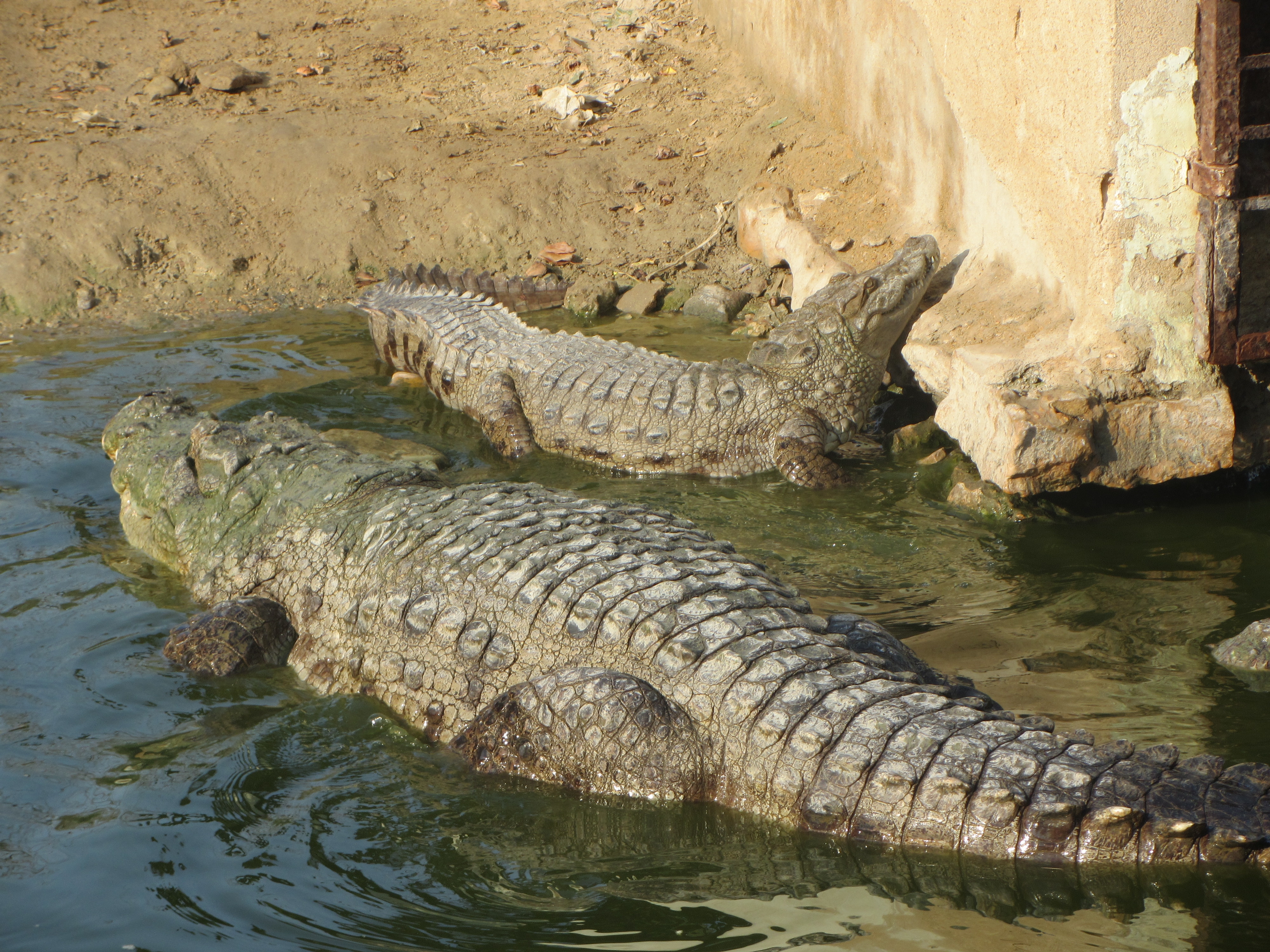
A crocodile grunts. There are 200 of them. And just when I think they won’t move, they twist their tails precariously, bask in the sun and open their jaws wide apart.

3

Despite that, my guide insists they are man-lovers. Legend is, he says, that once a child fell into their swamp. The leader of the pack, which he calls the Mor Sahib, carried the child on its snout, and left him ashore. They never hurt him.

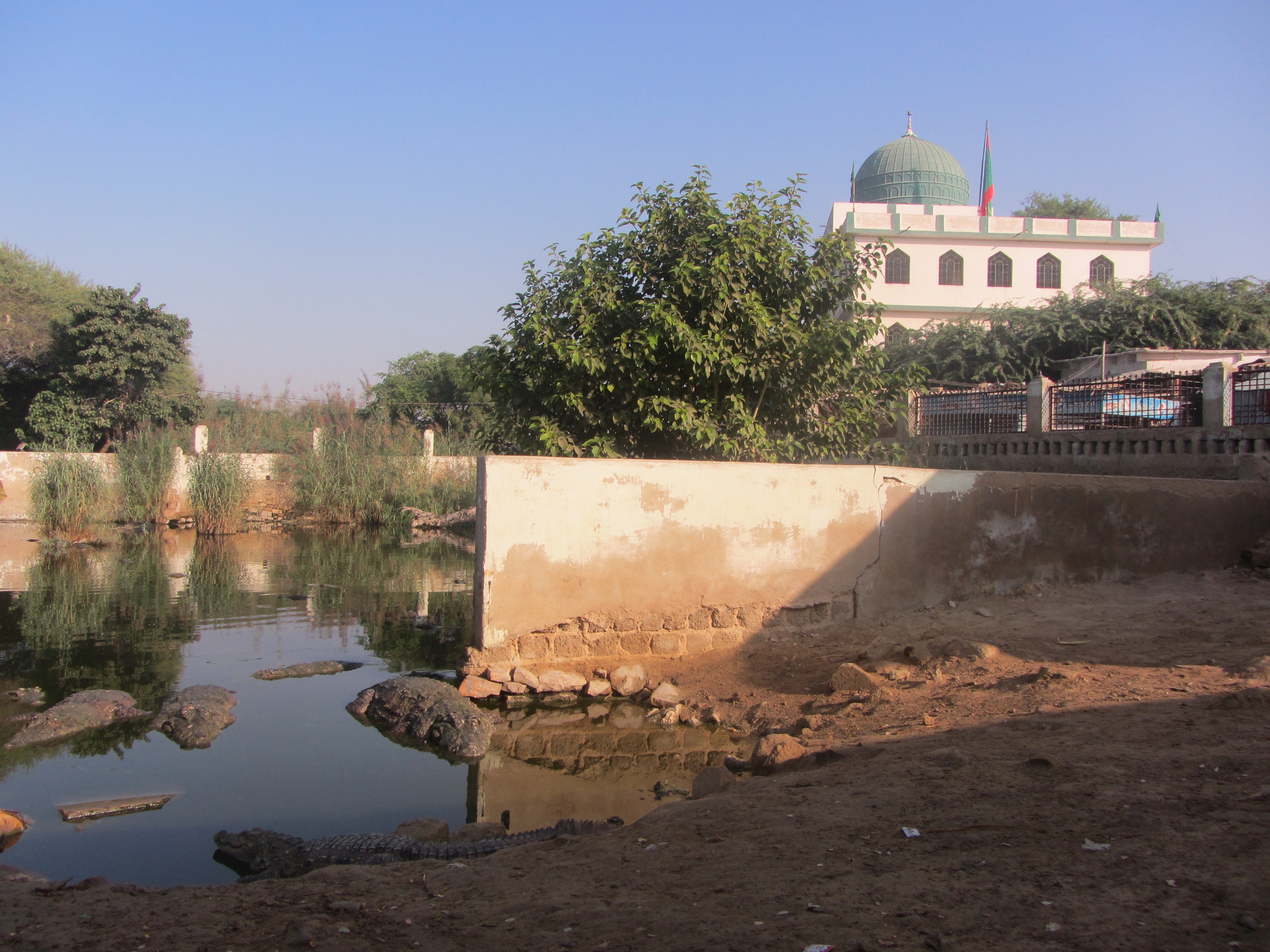
At the 700 old shrine of Mangopir, the crocodile pond is a major attraction. Myth is, that lice from a Sufi saint fell into the pond, and then it grew into a crocodile. For years, followers of the Sufi saint, offer these crocodiles meat, and also badami halwa. Some are thrown rose petals at.

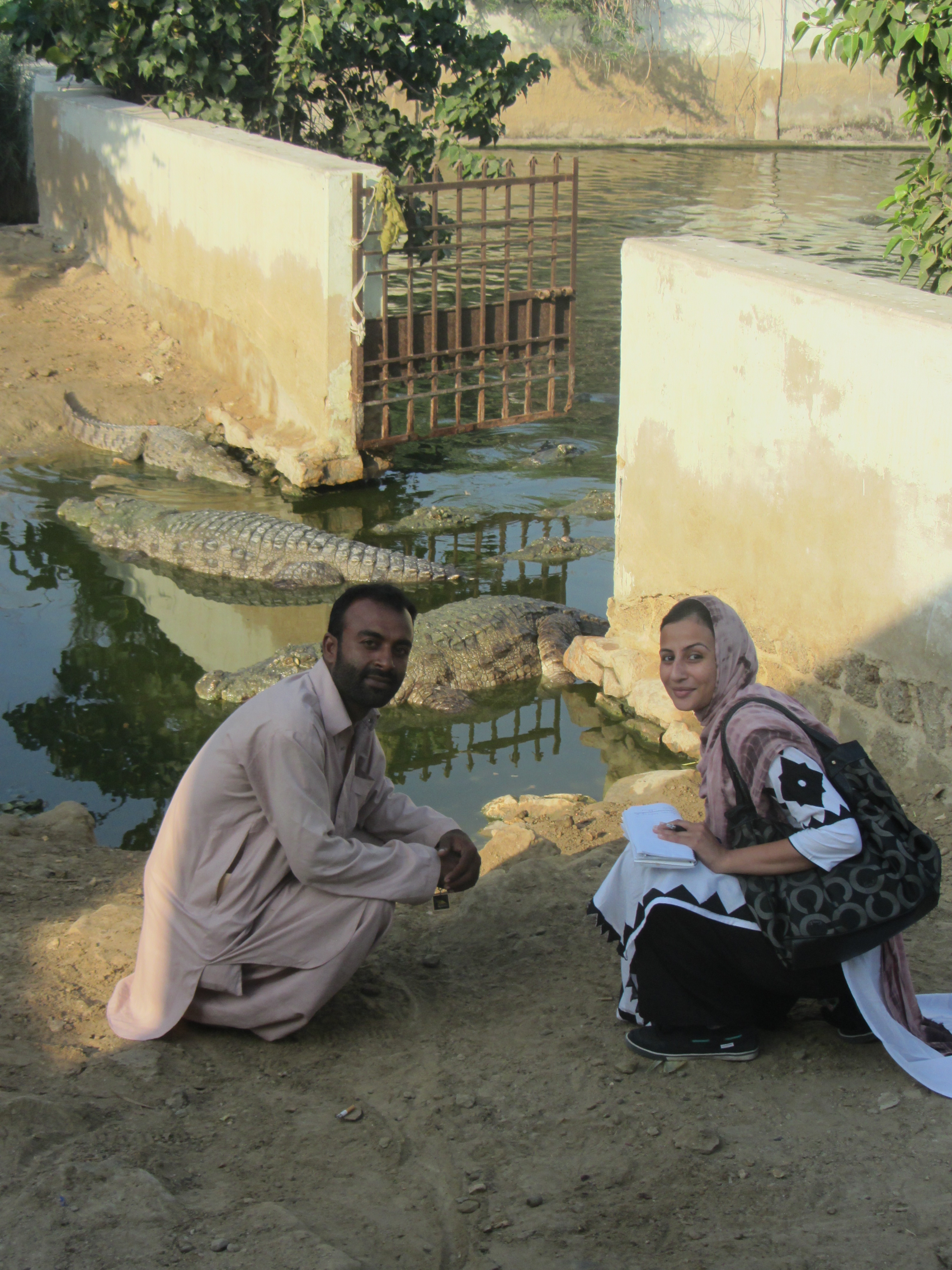
I pose by the crocodile, with my back at the gentle beast. I’m very scared. I get visions of the crocodile opening its jaw apart and taking me in. The picture clicks, I get up and say a silent prayer.

me

Amid security concerns visitors to the shrine have reduced considerably. And so the crocodiles are starving. Even so, they are breeding well. And the small swamp is over crowded. The crocodiles do not have much space to move.

Crocodiles lay eggs, they bury them in the sand around the swamp. And a baby crocodile is as big as tiny house gecko, my guide tells. With time they grow into these giant nine-foot long creatures.

4

Mangopir, as the name of the area goes, is a run-down locality at the Northern end of Karachi. A hilly area, it is breathtakingly beautiful in the early morning. The hills store marble, the ones you use on your floors, and the area is surrounded by marble quarries. Trucks pass by carrying huge marble slabs. I’m scared a slab will fall on my car and crush me as I ride past.

Next we move to the hot water springs. There are separate entrances for men and women, but as no one is around I am allowed to enter the men’s area. I enter a stone walled room, with water entering from one side, and leaving from the other. The walls are algae laden, and steam blows out.

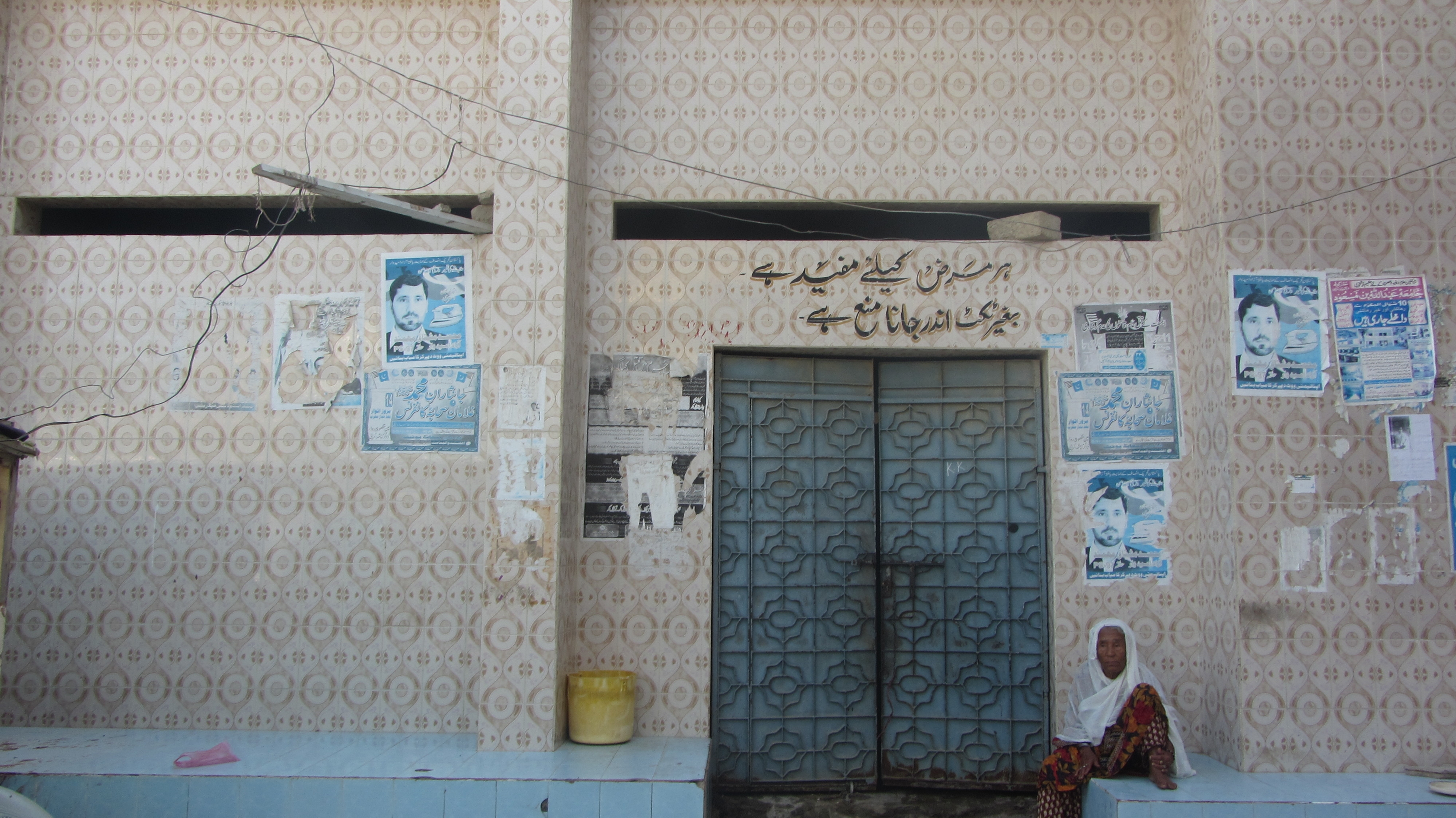
a woman guards the entrance to the hot water spring. The inscription over the gate says, “beneficial for every ailment. do not enter without a ticket.”

I touch the water. Its warm. I drink some. And splash some on my face. It’s refreshing.

Next we reach the shrine. There is no security. No metal detectors. No police. No paramilitary. And the Taliban are present in the area. It’s a known fact. They’ve asked the locals to close down the shrine, but for now they’ve just decided to not give a shit.

full shrine

I take of my shoes, and am taken up a flight of white marble stairs. It leads to a huge hall where the saint rests in peace. The grave is covered with a rich green mantle. In Arabic, in gold, are few inscriptions. I read Ali and Hussain.

grave2

My guide insists I pray first. I’m uncomfortable, mainly because I don’t know what to do. I was raised by a family which discourages visiting shrines. But I don’t want to hurt my guide. Help me through this, I whisper to a friend who’s accompanying me.

Do what I do, he says. He enters the hall, sits by the grave, and raises his hand in prayers. I follow suit. I recite a few verses from the Quran I remember, and pray that the saint rests in peace. Next he kisses the grave. Gets up to leave. I get up too, and turn towards the entrance. Do not turn your back at the saint, he hisses. Quickly I change my position so that now I am facing the grave. We walk backwards to the entrance.

We move up a flight of stairs. Now I am at level with the green dome of the shrine. I look down. I can see the whole city. At least the North of it. I am surrounded by hills and date trees. I can see the crocodiles. And the hot water springs.

viewfromtop

the view from the top

maple

the hollow maple tree

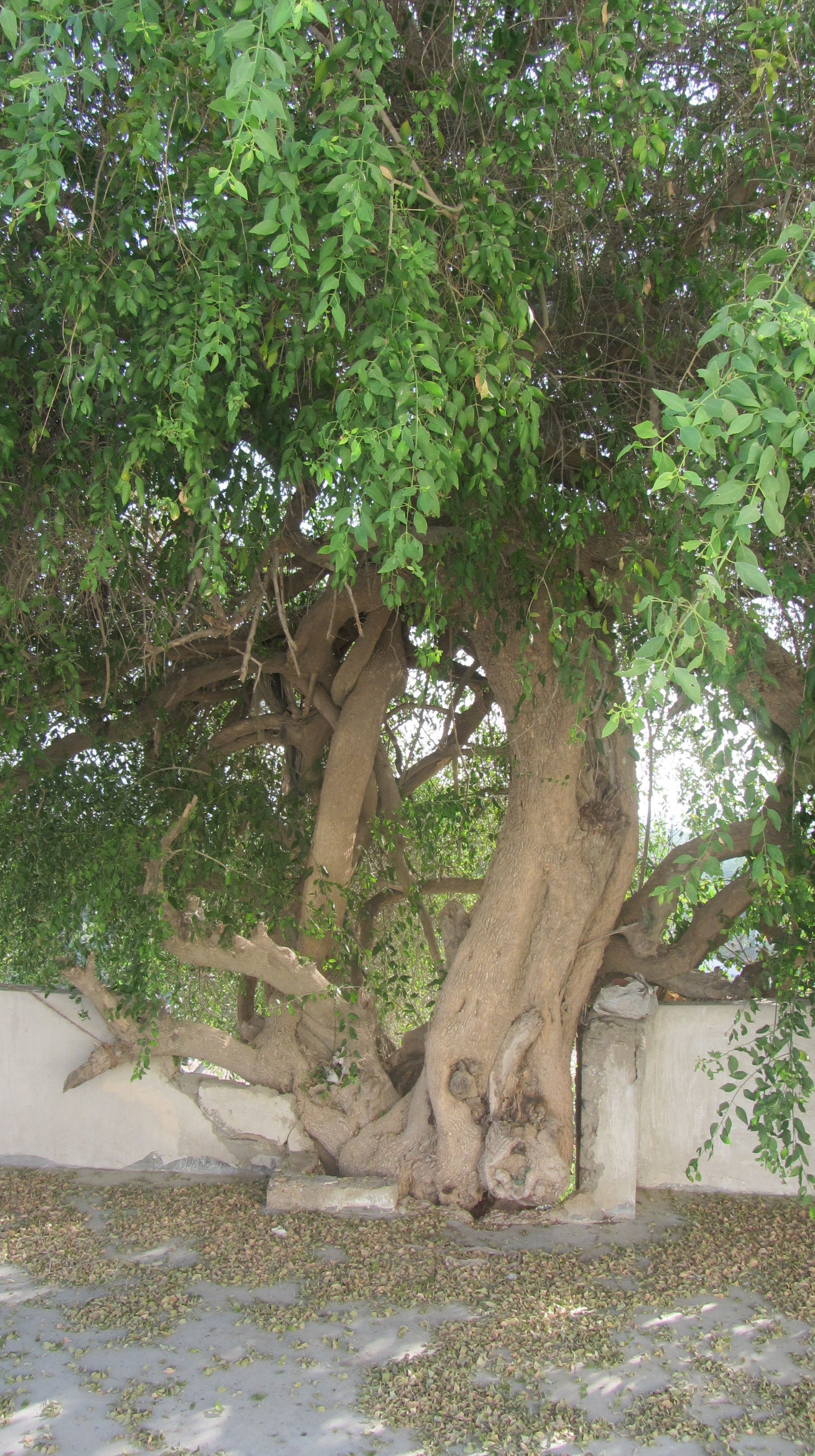
My guide orders green tea. We sit underneath a 500 year old maple tree and sip it. The tree is hollow from inside. These trees catch fire and explode after a hundred or two hundred years. The trunk becomes hollow. The hole is big enough for a grown person to stand inside. But it keeps growing.

There is a lepers colony at Mangopir. Back in the days when the British ruled the country, or even before that, lepers flocked to the hot water springs which were thought to cure the illness. Back in those days leprosy was considered contagious. So when a person caught the illness he was banished from his family and community. Hence the Urdu curse, Allah tumhay kooray lagay, God give you leprosy.

When a British officer visited Mangopir, and saw all these lepers camped around the springs, he constructed a hospital for them in the 1860. The hospital still remains.

leper

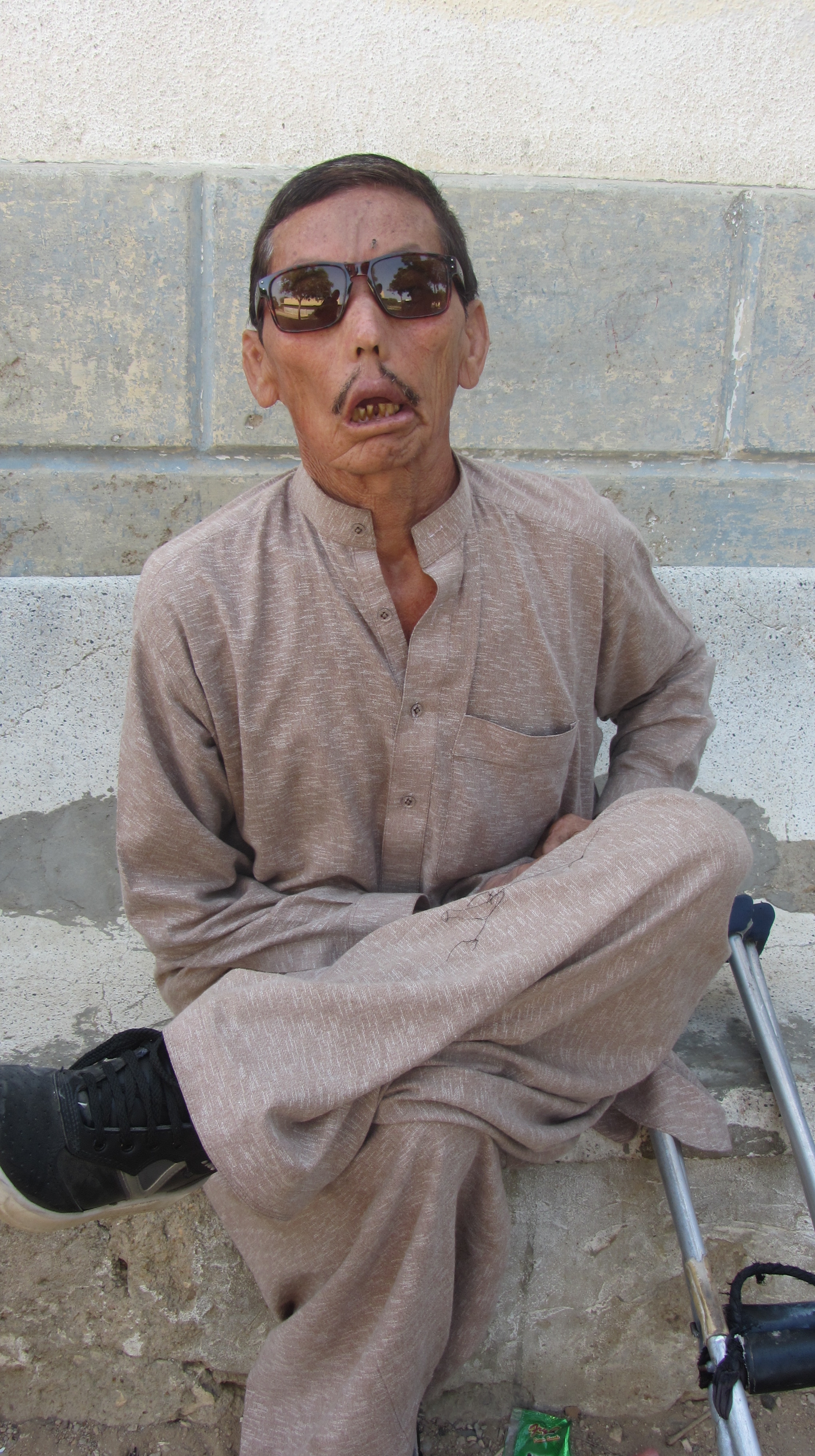
a patient under treatment for the past 20 years. He runs a shop in the area, and lives with his wife and children

The lepers get treatment there. Many of them have now opened up their shops in the colony. Some of them are in wheel chairs, others in crutches. Some can not see, and so wear dark glasses. Some have a nose missing, some have a mouth twisted to one side.

But they live normal lives. They have wives and children. They engage in business. Being handicapped is the only problem I have, otherwise I am good, as one leper put it.