
Want to be the next big thing? Join the IBA

Standard

99718294-mamnoon-hussain shaukat asad


Karachi

“If you get in, you may become the next president of Pakistan.” Dr Ishrat Husain, the director at the Institute of Business Administration (IBA), is thinking of adding this line in the prospectus of one of the most prestigious educational institutions of Karachi. And while Hussain may have said this with a quick laugh, everyone at the IBA is proud of the latest feather in its cap. Mamnoon Hussain, the president-elect of Pakistan who will take charge of his office in about a week’s time, once sat in the same classrooms,where about 2,000 bright, young students, sit now. They might not have the same ambitions, but have all the desire and the abilities to be the leaders in their respective fields once they graduate.

Big names

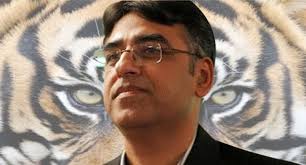
The next Pakistani president is not the only famous one to have walked the corridors at the IBA. Shaukat Aziz, a former prime minister, and Asad Umar, a former CEO of the Engro Corporation who is now a National Assembly member and perhaps one of the country’s best corporate success story, are also IBA graduates. Year after year, it has churned out eminent stars in every field – from fashion to education to the corporate world. The website boasts of a list of its prominent alumni. Famous fashion designer Amir Adnan, Habib Education Trust CEO Almas Banna and Synergy CEO Ahmed Kapadia are among a few. “They make up only a fraction of our prominent alumni,” says Shahid Shafiq, the alumni’s representative in the IBA board of directors. Though Hussain may not be an IBA graduate himself, he has been the State Bank of Pakistan governor twice. He has been credited with major restructuring at the central bank as well as reforming the country’s banking sector. And despite such a glorious past, he still desires to take the IBA to further heights. “Almost 50 percent of all CEOs in Pakistan are IBA graduates,” boasts Hussain. But women are largely missing from the picture. To this Hussain pauses to ponder. “The glass ceiling [phenomena] is still prevalent in the corporate sector,” he says. “So is the old boys’ network where women feel out of place. The phenomenon is still present even in the developed world.”

High standards

And what makes IBA so successful? Its value chain and strict adherence to standards. “Only the very best make it to the IBA. And we take students only on merit. Even if a [prospective] student is my nephew, he cannot get admission to the IBA [through unfair means] because our results are computer-generated and the admission process goes through the board of directors.” This year around 3,200 students sat for the admission test for the undergraduate Bachelor’s of Business Administration (BBA) programme. Only 300 could pass the rigorous exam. “[Even after admission] if a student,” Hussain explains, “does not maintain 2.2 GPA, he is kept on probation. If he fails to meet the target, he is expelled.” The same standards apply to attendance. “More than four absences in a semester course and you cannot continue.”

IBA of the ’60s

When Aziz and Hussain graduated back in the 1960s, IBA was nothing like it is today. There was no air conditioning. The wooden desks were broken, much like the ones seen in government schools. Sometimes pigeons would make nests at the windows, which nobody cleaned, said Muhammad Ather Rana, a staff member. Today, the IBA has a state of- the-art campus, with air-conditioned classrooms equipped with multimedia, and some even with Wi-Fi connectivity for video conferences.

Self-sufficiency

While other state-run institutions are crumbling under financial burdens, the IBA has managed to stand tall. But it has not always been self-sufficient financially. When Hussain took over as the director in 2008, he had set two goals. “{The] IBA had to be ranked among the top 10 universities in the region and the top 100 in the world,” said the institution’s registrar, Captain Ahmed Zaheer. And so the renovation began. After 1965, not a single block had been added to the building. “If a curtain hung down from its hook, no one bothered to replace it,” said Zaheer. “In short it was much like any other government institution.” But perhaps the standards of education were not compromised. And even for the renovation, the help from its alumni was enormous. And as acknowledgement, their names have been put on the buildings they sponsored.

Great expectations

And what does the IBA expect from the new president? “There is a legislation pending in the assembly. If it is passed, the IBA will become a university and the director will become the vice chancellor. We expect Mamnoon sahib to do us the favour,” Zaheer says.

Would-be suicide bomber reunites with family

Standard

By Sidrah Roghay

Karachi

At the age of 15, Muhammad Asif* has cheated death quite a few times already. Kidnapped from a seminary in Karachi; taken to Quetta; drugged and tortured; forced to don a suicide bombing jacket; but then sent back to Karachi.

Now back with his family, the would-have-been child suicide bomber is ready to share his story.

“It was after Asr. Maulvi sahib asked me to meet him after the prayer,” recalls Asif, who studied at the Tahafeez ul Quran Malikia Madressa in Mangopir, an impoverished neighbourhood in the north of Karachi infested by Islamic militants. “A black car was waiting for me outside. Maulvi sahib instructed me to sit in the car and bring back a parcel. I asked him to come with me but he insisted that I go alone.”

From what he narrates, the cleric was involved in his kidnapping all along. A few hours into the journey, Asif panicked and began to scream. “The men put a handkerchief to my nose and I went to sleep.”

The boy was drugged. When he next opened his eyes, he found himself in a room, tired and groggy. “There were three more boys sleeping in the room; two of my age, one slightly older,” he says.

Asif started screaming. “Two men with long hair and beards appeared,” he recalls. “They asked me to shut up but when I did not, they drugged me again.”

The boy soon lost track of time, sleeping under the influence of drugs most of the time. He was drugged every night, only to be put to sleep when he regained consciousness.

“They would hit me whenever I screamed. One day they said they will break my limbs. Once they even tried to do it with a knife but their mother came inside. She shouted: ‘Hit me if you want but leave the child alone,’” Asif recalls. “She saved me.”

The teenager found out that he was no longer in Karachi, but in Quetta. Then one day, he and the three other boys in the room were forced to put on a suicide jacket. Asif says the day was when elections were being held across the country.

“But the kidnappers’ mother came to my help again. ‘Take me if you want but leave the child alone,’ she pleaded to them, begging them while crying. The men had no other option but to leave me alone.”

Asif never saw the three boys again. A few days later he was brought back to Karachi. “I was taken to the Masjid-e-Tayyab Madressa Nizamia, a seminary at Al-Asif Square in Sohrab Goth,” he says. “An armed man always guarded me; even when I went to the bathroom.”

The only time the boy was allowed for himself was a few minutes to say his prayers. This is also when Asif managed to pass on his father’s phone number to some people, who came to the mosque to offer their prayers.

Finally someone contacted his family in Mangopir who came with 15 armed men to get hold of the boy from the seminary. They had to go armed because the police refused to help.

Where are the police?

On June 25, about 50 men gathered outside the Karachi Press Club to protest against the police for refusing to book the three clerics – Qari Abdul Khaliq, Qari Abu Bakr and Hafiz Nazeer – whom the family accused of kidnapping Asif.

Every year at least 10 children are kidnapped from Mangopir, the residents claim. “We were lucky to find our child,” said Asif’s uncle. “Often the parents of seminary students are so poor that they put their children there for the free food and shelter and forget all about them.”

Mangopir SHO Aslam Joya denies the reports of missing children. “This [Asif’s case] was the only one we have registered. There have been no other instances of missing children in the area.”

The police have lodged an FIR (181/2013) and are investigating the crime, he added.

Why the children?

In about 393 suicide bombings across Pakistan since the turn of the millennium, over 5,500 people have lost their lives and more than 14,000 have been injured. The attacks are often carried by trained suicide bombers, mostly young men from poor backgrounds who believe the war in the name of god will take them to paradise.

Zahid Hussain, author and analyst, who has spent time with child suicide bombers, explains children are used in terrorist attacks as they are agile and get past security checks relatively easily. In some instances gangs kidnap children from very impoverished backgrounds and then sell them off to militant organisations.

In November 2012, the Peshawar police also arrested a 13-year-old boy wearing a suicide jacket. After a bomb squad defused the explosives, the child disclosed he had been forced to carry out the attack, claims a recent report by the Society for the Protection of the Rights of Child (Sparc) titled “The State of the Children of Pakistan 2012”.

Lifetime scars

When Asif was found, he would go for days without speaking to anyone, even his immediate family members. He was scared of everyone.

Most child suicide bombers suffer immense psychological trauma, experts claim. “The hardened ones stick to their beliefs such as killing Shia community members to be guaranteed a place in heaven,” says Hussain. “We need to rehabilitate them and make them useful citizens.”

Efforts are under way to “de-radicalise” these suicide bombers by the Pakistan Army. Four “de-radicalisation centres” are operational in Swat and FATA, according to the military’s media cell, the Directorate of Inter-Services Public Relations known as the ISPR.

The first such centre “Sabaoon” was established in Swat in 2009 to rehabilitate children aged between nine and 15. The centre has successfully reintegrated 154 juveniles into the society.

For adults aged 16 and above, Mishal was set up in Swat in June 2010; Heila was established in Tank in November 2011; and Naway Sahar was set up in Bajaur in January 2011. These three de-radicalisation centres have benefited 1,224 people.

*Name changed to protect privacy