Thar– a bureaucratic failure

Standard

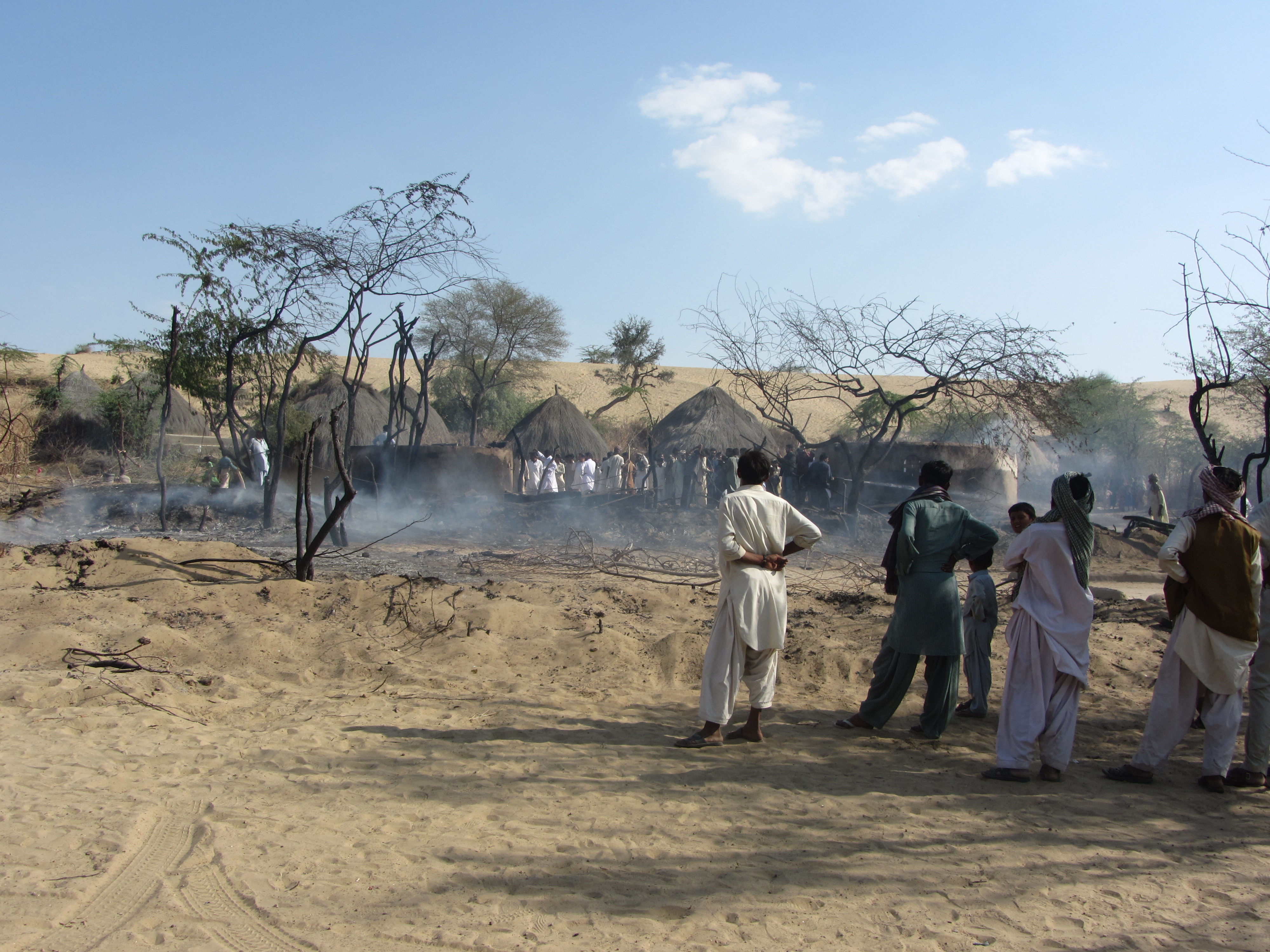
THAR: The sunflower plantation disappears. It is replaced by thorn bushes and starved camels. Women, children and men dot the roads with their cattle as they walk to safer places in search of food, water and employment. The change in landscape is stark — lack of water has shriveled everything at Tharparkar.
Image

This is not the first time a drought has occurred. As recent as in 2007 another drought hit the only fertile desert of the world. “There was another in 2005, 2004, 2001, 1999, 1996, 1995, 1987, 1988, 1985, 1979 and 1968. But this time the situation is much worse,” said Pardeep Kalani, a social activist in the area.


The Mitti Civil Hospital, the only hospital in the entire district, is restive today. The army is here guarding the run down white building. Politicians arrive in Land Cruisers followed by police mobiles — their sirens blare rudely on the cobbled streets pushing pedestrians to the roadside — they bring with them relief goods and a barrage of reporters — who take pictures as they distribute food to their voters who they had forgotten till the loss of lives made headlines.
Image


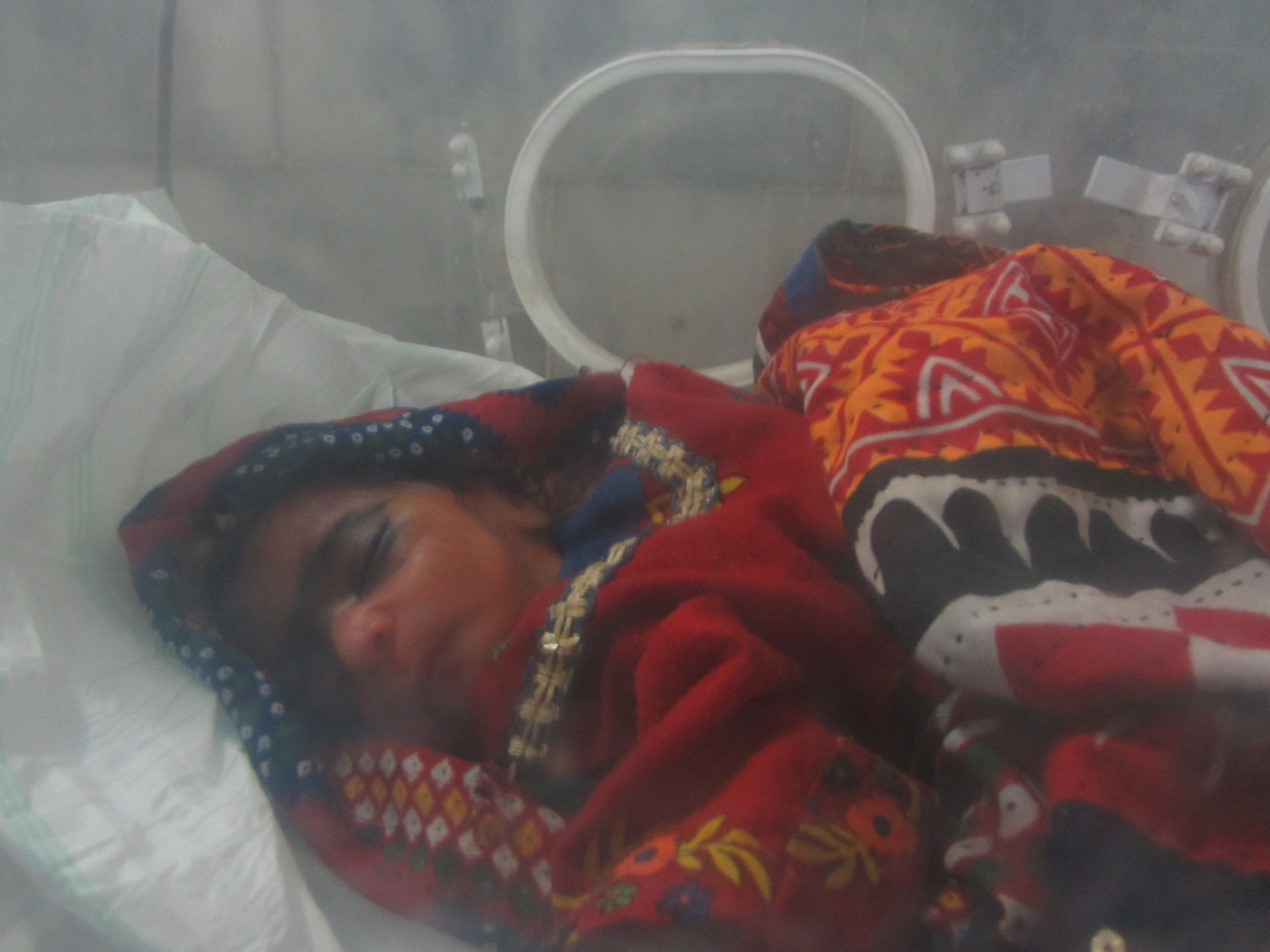
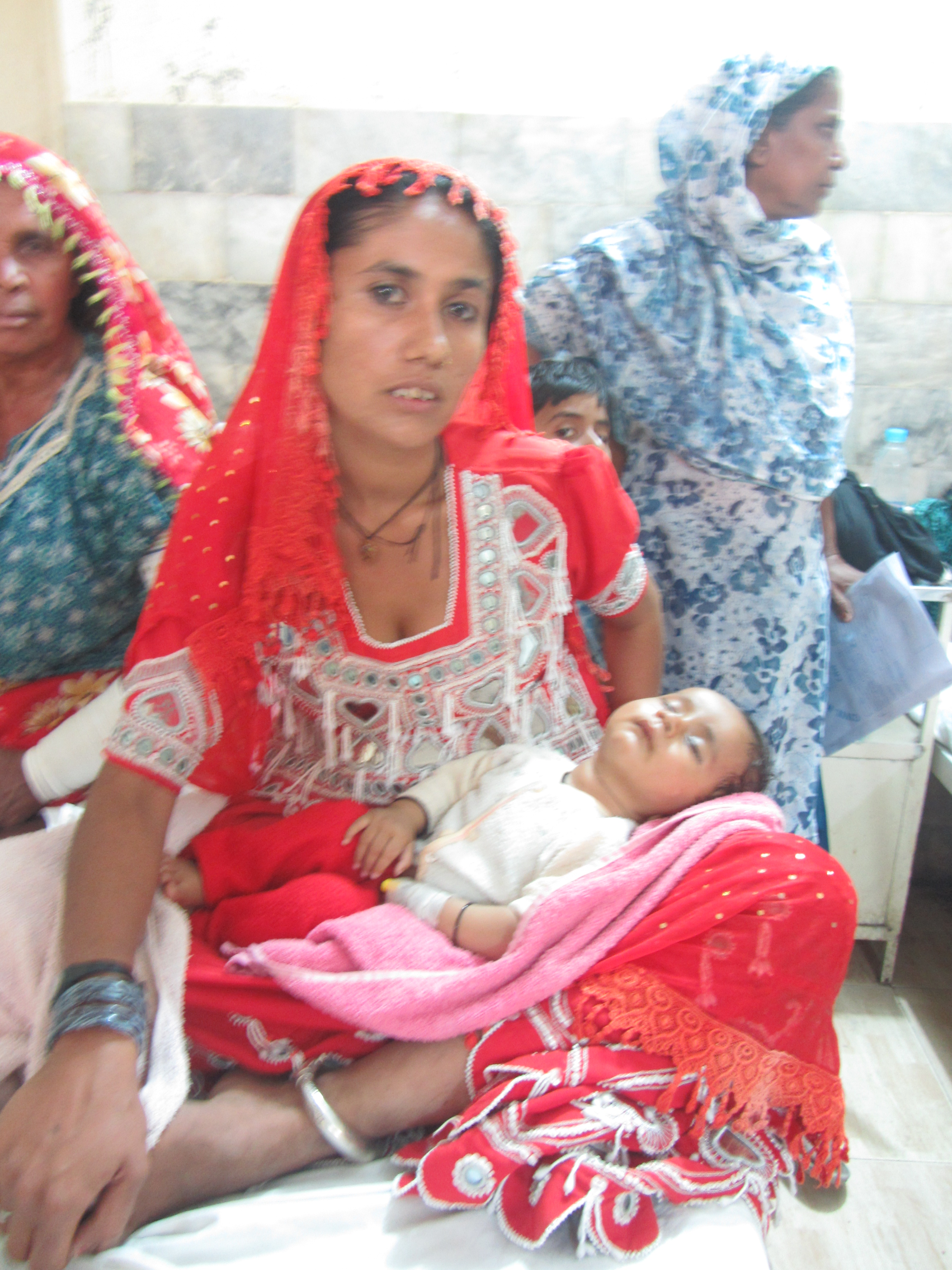
One hundred twenty five people died, seven in March. At the intensive care unit malnourished babies lie in beds. Some are kept inside incubators which locals call ‘sheeshay ka dabba’. Their mothers sit at their sides. They look wasted. “Malnourished mothers give birth to malnourished babies and so the cycle continues,” explains a doctor.
Image


The former head of the hospital was sacked last week. A new one arrived. “We need incubators, medicines and a team of qualified doctors,” he states. There is something wrong with the diagnosis patients are receiving. While Kuldip Bachu, 25, complains of pain in her joints, breathing difficulty and severe headache, the doctors told her it is just a stomach-ache. “We are falling sick because of the water we drink,” she says.

When the drought comes their only source of water dries up. “Water in the wells goes down to a hundred feet. We tie pillows to our buckets and pull out water. But the water we get is salty,” said Kavita, a local.

It is mainly small-scale farmers who are dying of the drought. They live in thatched huts and grow crops for a living. The desert becomes green when it rains. But lack of water has pushed it into its present state.

When the British ruled Tharparkar they had set certain rules. If by August 15 every year there was no rain, emergency was to be declared in the region. Thereby efforts to relocate families and release food stocks were to be made.

The Sindh government was following the 300-year old policy — only with much less efficiency. There was moderate rainfall in September and so the government pushed the announcement to much later.

Image

The godown at Mithi is stocked with 11,000, sacks of wheat. But it was not until Saturday that food was released. By then scores of lives had been lost. “We work for the food department. Our duty is to stock goods. We cannot release anything till the revenue department tells us to,” says the in-charge as he directs workers to load a truck, which has just arrived.

Top PPP leadership gathered at Thar in the last few days. They included Bilawal Bhutto, Qaim Ali Shah, Sharmila Farooqui and Rubina Qaimkhani. As part of long term strategy to empower the forgotten desert it was decided that every week a tanker will bring water to the drought affected areas.

But what about a permanent solution? “No pipeline for water can be laid in these areas. The population is scattered in small pockets every where,” said a spokesperson for social development minister Rubina Qaimkhani.

The National Disaster Management Authority seems cold. “The media is flaring up the numbers. It is an annual phenomenon. Twenty-one babies died. We have announced a Rs77crore food package,” said a statement released.

Image

As the car prepares to leave for Karachi, a group of ten-year old boys see the PPP flag on the Land Cruiser leading the caravan. “Jiyay Bhutto,” they roar, oblivious of how their leaders have failed them again.

Tharparkar does not need aid in the form of wheat or water. It needs a socio-economic overhaul — education, employment, empowerment and awareness to choose better leaders. As Amartya Sen, nobel laureate puts it— “no famine has ever taken place in the history of the world in a functioning democracy.”

 originally published here


One year later, free education remains a distant dream

Standard

Karachi

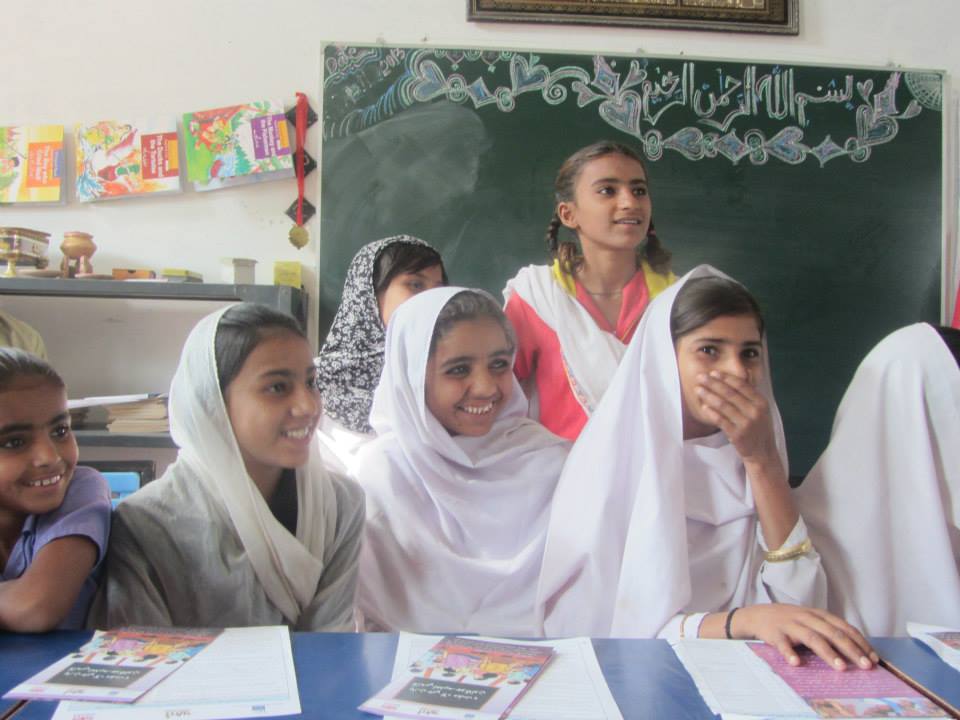
In Sindh’s Jamshoro district, there are pockets with zero percent literacy. But at a school run by a not-for-profit organisation, a group of 20 students, mostly girls, are trying to change the status quo.

a group of girls at Jamshoro who are striving to change status quo

a group of girls at Jamshoro who are striving to change status quo

They know everything about Article 25a—the right to free and compulsory education for children aged from five to 16; the fact the constitution recognises education as a fundamental right now — a right that citizens are born with; and that if parents don’t send children to school they can get imprisoned for three months.

In their village, they have held theatrical performances to increase awareness about the law. They have visited parents. They have even talked to government teachers, one of whom is now tackling the problem of absenteeism at his high school by writing letters to parents whose children are not attending.

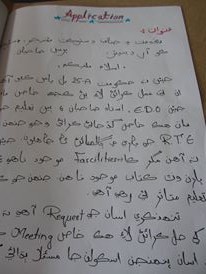
A boy died in their village while crossing the highway to reach his school on the other side. He was run over by a truck. The girls wrote a letter to the district’s education officer to tell him about this very important issue.

a letter the girls wrote to the education officials complaining about the school on the highway.

a letter the girls wrote to the education officials complaining about the school on the highway.

“Education is our right. If the authorities do not give us our right, we should pester them until they succumb,” says Shehla, a vocal ninth grader. And how do you pester the government? “We write letters; involve the media; and hold peaceful demonstrations,” she says.

This is a small community mobilisation campaign that the Indus Resource Centre, a not-for-profit organisation, is running at three of its schools in Jamshoro. While this may be a ray of hope, the larger picture is somewhat bleak.

A year after Sindh became the first province to guarantee education as a fundamental right to its citizens, not much has been done on ground. A visit to rural areas brings out a dismal picture of public schools.

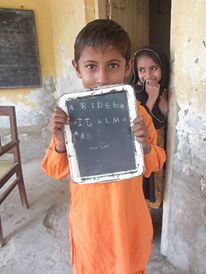
Against promises by successive ministers of introducing technology in education, students can still be seen using slates and chalk. At a higher secondary school in Kotdiji, a village in Khairpur, there are only two teachers against the needed 22. Not surprisingly, students don’t bother to attend school.

slate

In Habibullah Goth, another downtrodden village, a new school building has been constructed in front of an empty school building. While the former enrols about 10 students, villagers don’t know the last time classes were held.

Many girls interviewed during the visit accepted that their parents did not allow them to go to high school as boys from other villages sat in the same classes.

Nutrition remains a problem and during recess many students run home for a quick snack. “Generally they come without breakfast. And sometimes after they leave school for lunch they don’t come back,” said a teacher present at one of such schools.

A pilot project by a milk company and a private school where students are given a cup of milk for everyday attendance has shown remarkable improvement in turnout, claim teachers.

No official notification has been dispatched to office-bearers at the provincial education department, informing them about the legislation for free and compulsory education. As a result, only 25 percent officials in rural Sindh know about the existence of such an act, states a study conducted by the Indus Resource Centre.

The study titled “Implementation of the Sindh Right of Children to Free and Compulsory Education Act” also states that only two percent parents in rural Sindh know about the year-old law. Similarly, only two percent of school-going children in rural Sindh know about the law. Among the teachers a mere three percent know the law.

Thirty-two percent of children in Sindh are out of school, according to the Annual State of Education Report 2012.

While the Sindh government took the lead in making education free and compulsory, there is a need now to make schools a fun place to learn. This can only be achieved through addressing the hurdles communities face in accessing education.

It is not that there is no demand for education. Schools run by the social sector are often full to the brim while public sector schools are plagued with low attendance. It is time the Sindh government takes the lead in bringing children back to school.

originally published here