In city’s Pakhtun areas, war on polio extremely hard

Standard

Karachi

When asked about the utility of the polio vaccine, Mirdaat, an eight-year-old Afghan waste picker calls it “an American conspiracy to wipe out the Muslim race”.

He holds the same opinion about blood screening for hepatitis. “Health workers will sell our blood to America. There is honour in Pakhtun blood. It cannot be sold.”

Eight other little waste pickers accompanying Mirdaat nod their heads in agreement.

After a controversial CIA-funded hepatitis B campaign, the polio vaccination drive in the Pakhtun-dominated localities of Karachi – where many Taliban militants are holed up – has suffered a serious setback.

So much so, that the CIA’s campaign to ensnare Osama Bin Laden was misconstrued as a polio vaccination drive.

Since mid-July last year, 17 health workers and five policemen involved in anti-polio campaigns have been killed and 14 others wounded by militants in 25 attacks across the country.

In December, five female vaccinators were shot dead in Karachi and Peshawar.

On May 13, Abdul Waheed, a social activist, was gunned down after he began a polio eradication campaign at his school. The campaign was hurriedly wrapped up.

Pakistan remains one of the three endemic countries for polio, along with Afghanistan and Nigeria. However, despite security threats, the country has made significant progress towards polio eradication in the last 18 months, according to a recently published report, “End Polio Pakistan”, by the WHO and Unicef.

There were 46 polio cases reported in Pakistan this year, 34 in the Federally Administered Tribal Areas (Fata) and seven in Khyber Pakhtunkhwa. Both areas are affected by militancy and military operations. In Sindh, four cases were reported this year.

 Polio prevention

The polio virus infects only human beings therefore it cannot survive in an area where all inhabitants are vaccinated.

A case was reported recently wherein a minor girl in Gadap Town had contracted polio despite being vaccinated.

A child needs to be administered polio drops in every round of vaccination to strengthen immunity.

“Some children develop immunity after five or six doses. Most need as many as 10 doses. Where children are malnourished, more doses are needed,” it was stated in the Unicef report.

Considering the levels of malnourishment in Pakistan, which according to the Sustainable Development Policy Institute, affect 48 percent of the population, parents should never miss a polio drive.

Many Islamic scholars and religious institutions have endorsed the vaccine, terming it halal. They include the Darul Uloom Deoband India, the Organisation of the Islamic Conference, the International Union for Muslim Scholars, and the imams of Masjid al-Aqsa in Jerusalem and Al-Azhar Masjid in Cairo.

Moreover, all hajj pilgrims are now required to be vaccinated against polio.

Abdullah Bukhari, an elder of the Afghan Basti near Sabzi Mandi, gives an open invitation to health workers.

“We are aware of the health concerns that involve our people. If polio vaccinators face any hurdles, they are free to contact me. I will personally accompany them to ensure their safety.”

October 24 is marked as World Polio Day
 

Want to be the next big thing? Join the IBA

Standard

99718294-mamnoon-hussain shaukat asad


Karachi

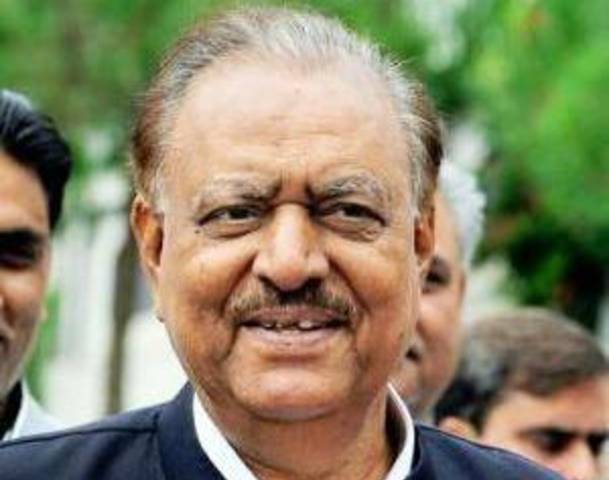
“If you get in, you may become the next president of Pakistan.” Dr Ishrat Husain, the director at the Institute of Business Administration (IBA), is thinking of adding this line in the prospectus of one of the most prestigious educational institutions of Karachi. And while Hussain may have said this with a quick laugh, everyone at the IBA is proud of the latest feather in its cap. Mamnoon Hussain, the president-elect of Pakistan who will take charge of his office in about a week’s time, once sat in the same classrooms,where about 2,000 bright, young students, sit now. They might not have the same ambitions, but have all the desire and the abilities to be the leaders in their respective fields once they graduate.

Big names

The next Pakistani president is not the only famous one to have walked the corridors at the IBA. Shaukat Aziz, a former prime minister, and Asad Umar, a former CEO of the Engro Corporation who is now a National Assembly member and perhaps one of the country’s best corporate success story, are also IBA graduates. Year after year, it has churned out eminent stars in every field – from fashion to education to the corporate world. The website boasts of a list of its prominent alumni. Famous fashion designer Amir Adnan, Habib Education Trust CEO Almas Banna and Synergy CEO Ahmed Kapadia are among a few. “They make up only a fraction of our prominent alumni,” says Shahid Shafiq, the alumni’s representative in the IBA board of directors. Though Hussain may not be an IBA graduate himself, he has been the State Bank of Pakistan governor twice. He has been credited with major restructuring at the central bank as well as reforming the country’s banking sector. And despite such a glorious past, he still desires to take the IBA to further heights. “Almost 50 percent of all CEOs in Pakistan are IBA graduates,” boasts Hussain. But women are largely missing from the picture. To this Hussain pauses to ponder. “The glass ceiling [phenomena] is still prevalent in the corporate sector,” he says. “So is the old boys’ network where women feel out of place. The phenomenon is still present even in the developed world.”

High standards

And what makes IBA so successful? Its value chain and strict adherence to standards. “Only the very best make it to the IBA. And we take students only on merit. Even if a [prospective] student is my nephew, he cannot get admission to the IBA [through unfair means] because our results are computer-generated and the admission process goes through the board of directors.” This year around 3,200 students sat for the admission test for the undergraduate Bachelor’s of Business Administration (BBA) programme. Only 300 could pass the rigorous exam. “[Even after admission] if a student,” Hussain explains, “does not maintain 2.2 GPA, he is kept on probation. If he fails to meet the target, he is expelled.” The same standards apply to attendance. “More than four absences in a semester course and you cannot continue.”

IBA of the ’60s

When Aziz and Hussain graduated back in the 1960s, IBA was nothing like it is today. There was no air conditioning. The wooden desks were broken, much like the ones seen in government schools. Sometimes pigeons would make nests at the windows, which nobody cleaned, said Muhammad Ather Rana, a staff member. Today, the IBA has a state of- the-art campus, with air-conditioned classrooms equipped with multimedia, and some even with Wi-Fi connectivity for video conferences.

Self-sufficiency

While other state-run institutions are crumbling under financial burdens, the IBA has managed to stand tall. But it has not always been self-sufficient financially. When Hussain took over as the director in 2008, he had set two goals. “{The] IBA had to be ranked among the top 10 universities in the region and the top 100 in the world,” said the institution’s registrar, Captain Ahmed Zaheer. And so the renovation began. After 1965, not a single block had been added to the building. “If a curtain hung down from its hook, no one bothered to replace it,” said Zaheer. “In short it was much like any other government institution.” But perhaps the standards of education were not compromised. And even for the renovation, the help from its alumni was enormous. And as acknowledgement, their names have been put on the buildings they sponsored.

Great expectations

And what does the IBA expect from the new president? “There is a legislation pending in the assembly. If it is passed, the IBA will become a university and the director will become the vice chancellor. We expect Mamnoon sahib to do us the favour,” Zaheer says.