Want to be the next big thing? Join the IBA

Standard

99718294-mamnoon-hussain shaukat asad


Karachi

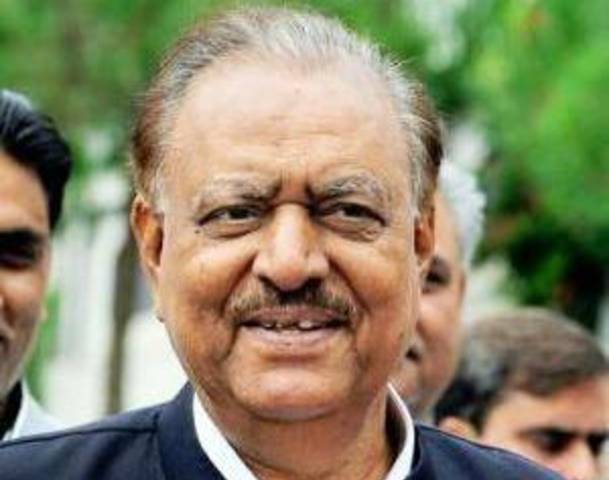
“If you get in, you may become the next president of Pakistan.” Dr Ishrat Husain, the director at the Institute of Business Administration (IBA), is thinking of adding this line in the prospectus of one of the most prestigious educational institutions of Karachi. And while Hussain may have said this with a quick laugh, everyone at the IBA is proud of the latest feather in its cap. Mamnoon Hussain, the president-elect of Pakistan who will take charge of his office in about a week’s time, once sat in the same classrooms,where about 2,000 bright, young students, sit now. They might not have the same ambitions, but have all the desire and the abilities to be the leaders in their respective fields once they graduate.

Big names

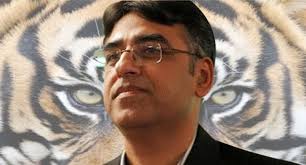
The next Pakistani president is not the only famous one to have walked the corridors at the IBA. Shaukat Aziz, a former prime minister, and Asad Umar, a former CEO of the Engro Corporation who is now a National Assembly member and perhaps one of the country’s best corporate success story, are also IBA graduates. Year after year, it has churned out eminent stars in every field – from fashion to education to the corporate world. The website boasts of a list of its prominent alumni. Famous fashion designer Amir Adnan, Habib Education Trust CEO Almas Banna and Synergy CEO Ahmed Kapadia are among a few. “They make up only a fraction of our prominent alumni,” says Shahid Shafiq, the alumni’s representative in the IBA board of directors. Though Hussain may not be an IBA graduate himself, he has been the State Bank of Pakistan governor twice. He has been credited with major restructuring at the central bank as well as reforming the country’s banking sector. And despite such a glorious past, he still desires to take the IBA to further heights. “Almost 50 percent of all CEOs in Pakistan are IBA graduates,” boasts Hussain. But women are largely missing from the picture. To this Hussain pauses to ponder. “The glass ceiling [phenomena] is still prevalent in the corporate sector,” he says. “So is the old boys’ network where women feel out of place. The phenomenon is still present even in the developed world.”

High standards

And what makes IBA so successful? Its value chain and strict adherence to standards. “Only the very best make it to the IBA. And we take students only on merit. Even if a [prospective] student is my nephew, he cannot get admission to the IBA [through unfair means] because our results are computer-generated and the admission process goes through the board of directors.” This year around 3,200 students sat for the admission test for the undergraduate Bachelor’s of Business Administration (BBA) programme. Only 300 could pass the rigorous exam. “[Even after admission] if a student,” Hussain explains, “does not maintain 2.2 GPA, he is kept on probation. If he fails to meet the target, he is expelled.” The same standards apply to attendance. “More than four absences in a semester course and you cannot continue.”

IBA of the ’60s

When Aziz and Hussain graduated back in the 1960s, IBA was nothing like it is today. There was no air conditioning. The wooden desks were broken, much like the ones seen in government schools. Sometimes pigeons would make nests at the windows, which nobody cleaned, said Muhammad Ather Rana, a staff member. Today, the IBA has a state of- the-art campus, with air-conditioned classrooms equipped with multimedia, and some even with Wi-Fi connectivity for video conferences.

Self-sufficiency

While other state-run institutions are crumbling under financial burdens, the IBA has managed to stand tall. But it has not always been self-sufficient financially. When Hussain took over as the director in 2008, he had set two goals. “{The] IBA had to be ranked among the top 10 universities in the region and the top 100 in the world,” said the institution’s registrar, Captain Ahmed Zaheer. And so the renovation began. After 1965, not a single block had been added to the building. “If a curtain hung down from its hook, no one bothered to replace it,” said Zaheer. “In short it was much like any other government institution.” But perhaps the standards of education were not compromised. And even for the renovation, the help from its alumni was enormous. And as acknowledgement, their names have been put on the buildings they sponsored.

Great expectations

And what does the IBA expect from the new president? “There is a legislation pending in the assembly. If it is passed, the IBA will become a university and the director will become the vice chancellor. We expect Mamnoon sahib to do us the favour,” Zaheer says.
For kids going to school, rickety rides a nightmare

Standard


school bus            school bus 2

Karachi

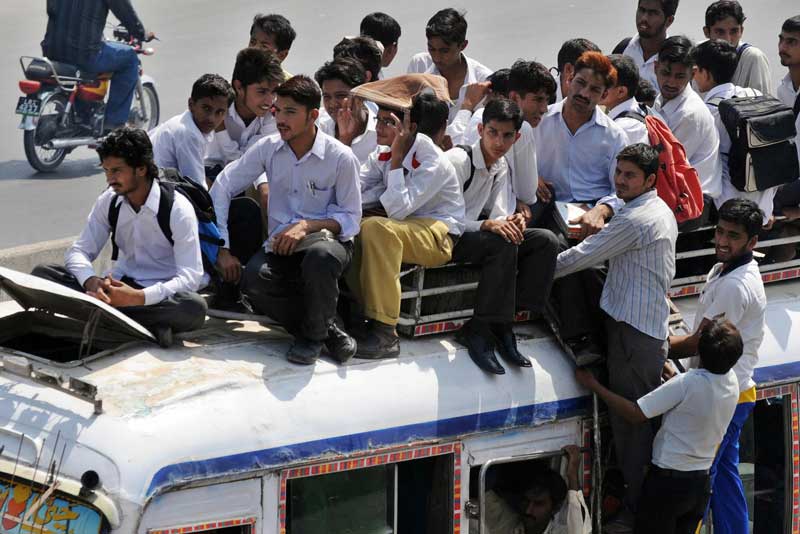
It is not a chicken coop neither they are farm chickens. Yet every day school children travel to and fro their place of learning stuffed inside rickety vans and hastily converted Suzuki pickups. Some even hang on the doors for lack of space inside these school vans.

While in the civilised world, school buses are given a specific colour – often yellow – to differentiate them from other vehicular traffic, the suggestion has not even been thought of in the education department.

In 1939, Dr Frank Cyr, a professor at Columbia University also known as the “father of the yellow school bus”, convened a conference in Texas to approve the nation’s first school bus standard. At the conference 50 shades of yellow were displayed, and the members finally agreed on a deep chrome colour, according to a report published in The New York Times.

The colour of the bus was based on a 42-page research published in the 1930s by Cyr which talked about everything needed to maintain school bus standards, from the axle to emergency brakes, and to the height and width of the bus.

Before this children went to school on anything, from horse-drawn carriages to cars their parents drove.

No lessons learnt

Pakistan has witnessed two major school bus accidents in recent years.

On May 25, a gas cylinder fitted in a school bus exploded in Gujrat, causing the death of 16 students and a teacher. About seven other students were injured also.

Earlier in 2011, in what became known as the Kallar Kahar tragedy, about 30 students, six teachers and their principal died when a school bus overturned after its brakes failed.

The students were returning from an excursion. It was later reported that the bus with the capacity of 57 was carrying 108 passengers, in clear violation of traffic laws.

Apparently, no lessons have been learnt even after two horrific incidents.

To date, school children are seen stuffed inside buses. Drivers often ignore speed limits as they try to get to school on time in the morning.

Countless problems

“For six months, I went to school in a van with weak brakes. The door also had problems closing and sometimes we would travel with the door open. Often the driver had problems shifting to the second gear; he could only drive in the first gear or the third gear,” said a student who recently completed her A-Levels from the Foundation Public School.

Most schools in the city outsource transport to private contractors. In case anything goes wrong, they refuse to share the blame.

“I could never complain to the school administration about the condition of my bus,” she claimed. “[As] at the time of my admission, the principal told my parents to hire a school bus from outside the school premises. They had nothing to do with school transport.”

Private schools believe that taking care of school transport is an additional responsibility.

“It is not possible for schools to take care of transport too. We can only tell transporters to maintain their vehicles,” said Khalid Shah of the All Private School Management Association.

After the Gujrat incident, the association members were called for a meeting with the Traffic DIG, where it was proposed to give yellow colour to school buses.

“But the idea was rejected,” said Shah. “When the government has never been able to repaint the yellow taxis or the green buses or the yellow Mazda vans, why try to redo a failed experiment?”

Why legislate?

No law has ever been drafted for school transport in the province.

“The need for such a law does not exist,” insists Fazlullah Pechuho, the secretary of the Sindh Education Department. He claims the responsibility of checking vehicles on the road, including school buses, lies with the transport department.

“The traffic wardens should check for driving licences, gas cylinder safety, over speeding and stuffing children beyond capacity.”

Dr Muhammad Memon, the director at the Aga Khan University’s Institute for Education Development, explains that a separate law for school transportation is not the norm internationally.

He maintains, however, there is a need to borrow the best practices from the countries in the region. In the UAE, he says for example, the government issues licences to schools which allow school buses to operate, and the parents pay for the transport. An assistant is also present for the younger students to help them sit in the bus.

Memon believes at least some sort of an agreement should be there between private contractors and the school management. “The school administration should keep a check on the transport contractors. [And] in case something goes wrong, the management should also be held accountable.”